
What Is a Folding Light Box? Portable Backlit Guide
Posted by Kira on Sep 2nd 2026
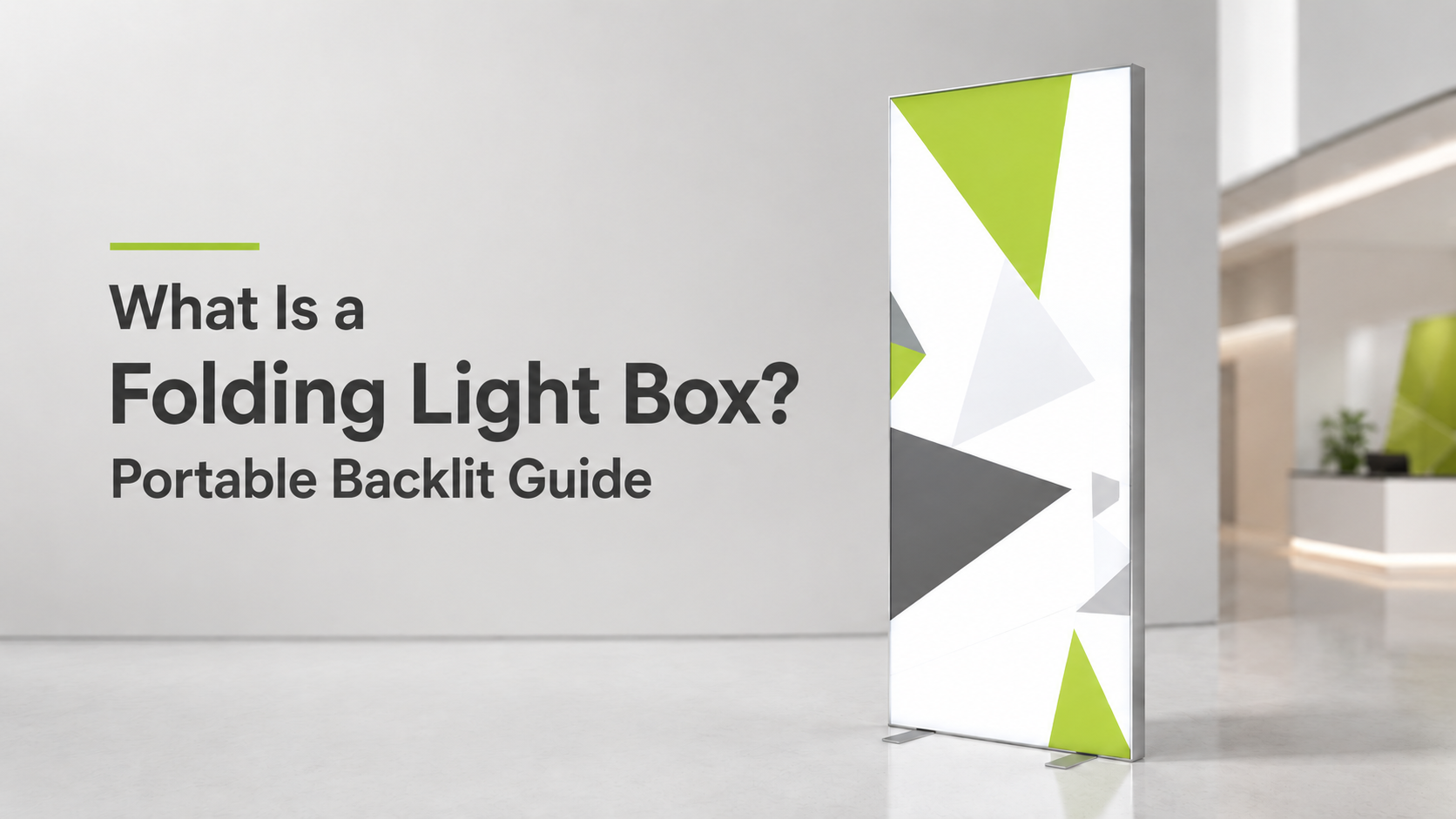
A folding light box is a portable illuminated display designed to combine the visual impact of a backlit graphic with a frame that folds down for easier transportation, setup and storage.
Unlike a traditional light box that may require multiple frame sections to be assembled at each installation, a folding light box keeps much of its main structure connected. The frame opens into its display position, the graphic is installed, and the lighting system is connected for use.
This makes folding light boxes particularly useful for trade shows, events, retail promotions and other applications where illuminated displays need to move between locations repeatedly.
The key advantage is straightforward:
You get a backlit display without treating every installation like a full frame-building project.
For businesses that manage recurring events, portable display inventory or multiple client projects, that can make a significant difference in day-to-day handling.
Quick Answer: What Is a Folding Light Box?
A folding light box is a portable LED display with a frame designed to fold for transport and open for installation.
It typically combines:
- A folding aluminum frame
- Integrated LED lighting
- Tensioned fabric graphics
- Freestanding support components
- Portable packing or carrying solutions
Once opened, the frame creates a rigid illuminated display. When the event is over, the structure can be folded back down for storage and transportation.
Display2Sign offers Folding Light Boxes designed for repeated professional use, including freestanding light box stands and matching illuminated counters.
How Does a Folding Light Box Work?
The basic function is similar to other fabric light boxes.
LEDs illuminate a printed fabric graphic from inside the frame, allowing the graphic surface to appear brighter and more visually prominent than a non-illuminated display.
What makes the system different is the frame structure.
With a traditional assembled light box, the installation process may involve connecting separate profiles, corners, lighting components and support hardware.
With a folding light box, much of the frame remains connected during storage.
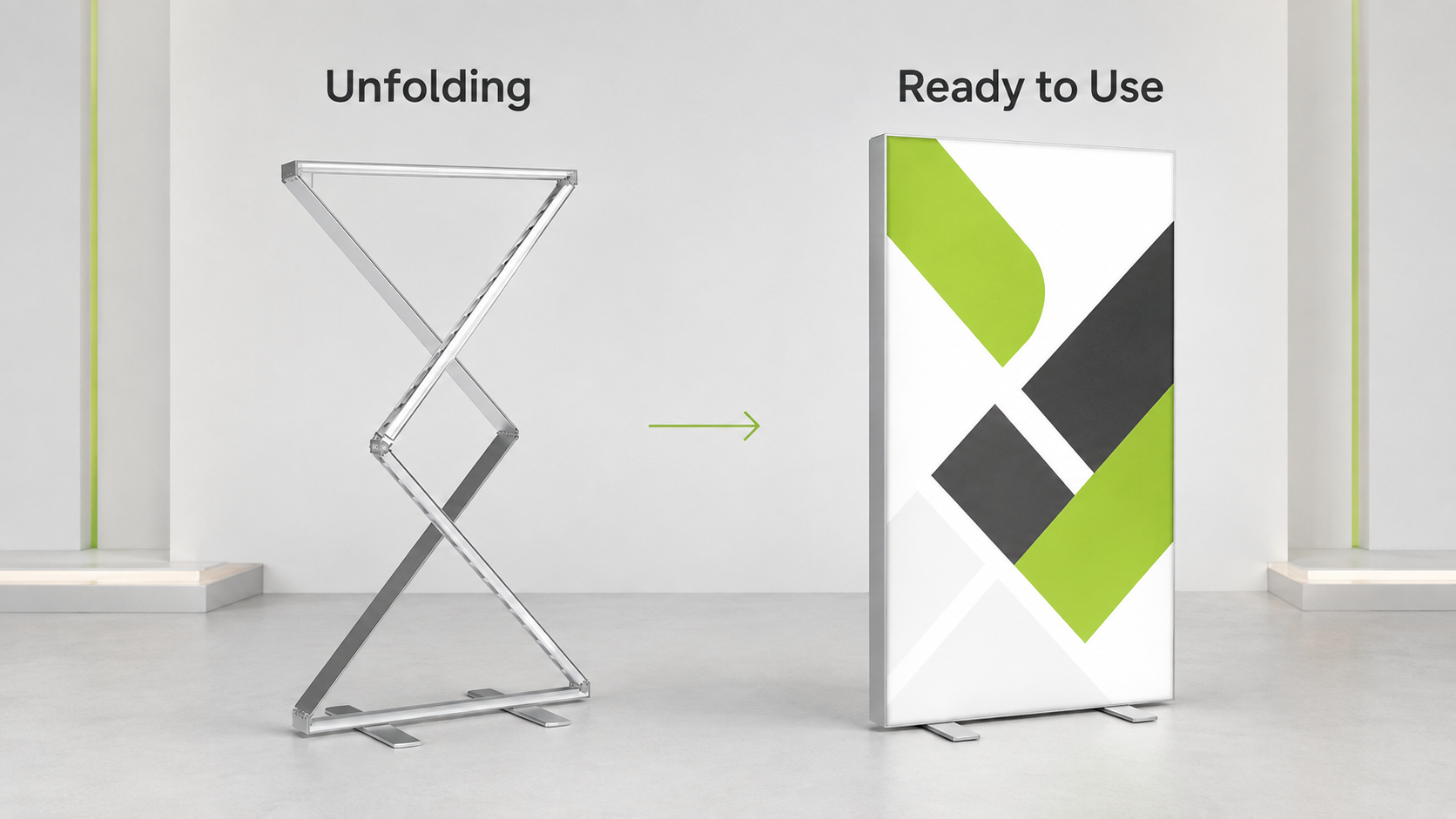
A typical setup workflow is:
- Remove the folded frame from its carrying case or bag.
- Open the frame into its full display position.
- Secure the folding structure and support components.
- Install the fabric graphics.
- Connect the lighting and power supply.
- Position the display for use.
The exact installation process varies by design, but the goal is the same: reduce the number of loose components and assembly steps required each time the display is used.
What Makes a Light Box “Folding”?
The word “folding” refers primarily to the frame architecture.
It does not simply mean that the graphic can be folded or that the light box is portable.
The structural frame itself is designed so connected sections can collapse into a smaller format for transportation and open into a full-size display.
This distinction matters because many products are described as portable light boxes even though their frames still need to be disassembled into individual sections.
A true folding structure can simplify several parts of the operating workflow:
- Fewer separate frame profiles to organize
- Faster unpacking and installation
- Reduced packing complexity
- More compact storage between projects
- Easier repeated handling
For a display used once, these differences may seem relatively small.
For hardware installed, dismantled and transported dozens of times per year, they become much more important.
What Are the Main Parts of a Folding Light Box?
Although designs vary, most portable folding light boxes are built around several core components.
Folding Frame
The frame provides the main structure and allows the display to collapse for transportation.
Display2Sign folding light boxes use an 85 mm aluminum frame, combining a portable structure with the rigidity required for a freestanding illuminated display.
LED Lighting
LED lighting inside the frame illuminates the printed graphic.
This is what differentiates the display from a standard folding fabric wall or non-illuminated SEG frame.
Fabric Graphics
Fabric graphics create the finished display surface and allow branding to be updated without replacing the complete hardware system.
When a campaign changes, the frame and lighting can continue to be used while new graphics are produced.
Base and Support Components
Freestanding light boxes require stable support so the display remains upright in exhibition, retail and event environments.
Carrying Solution
Portable hardware is only useful if it can also be packed efficiently.
Display2Sign folding light boxes include an Oxford carrying bag to make storage and movement between projects more manageable.
Why Use a Folding Light Box Instead of a Standard Display?
A folding light box addresses two requirements that do not always work well together:
strong visual presentation and portable operation.
A standard non-illuminated display may be easy to transport but lacks backlighting.
A traditional assembled light box provides illumination but can require more components and setup.
The folding light box sits between these approaches.
It provides LED illumination while simplifying the physical structure used to transport and deploy the display.
That combination is particularly relevant when a light box is expected to move rather than stay permanently installed.
What Are the Main Benefits of a Folding Light Box?
Faster Setup
The folding structure reduces the amount of frame assembly required at the venue.
Instead of rebuilding the complete perimeter from separate sections, much of the structure is already connected.
This can be valuable when setup windows are limited or when the display must be installed repeatedly.
Easier Transportation
A folding structure reduces the packed footprint compared with keeping a full-size display assembled.
It also minimizes the number of loose structural pieces that need to be handled separately.
Compact Storage
Trade show and rental hardware spends a significant amount of time in storage.
A frame that folds down can use warehouse, showroom or vehicle space more efficiently than a full-size rigid structure.
Backlit Visual Impact
The main visual advantage remains illumination.
Backlit graphics can create stronger contrast and help branding remain visible in busy trade show, event and retail environments.
Reusable Hardware
The frame and lighting system can be used repeatedly while the printed graphics change.
That allows businesses to separate the lifecycle of the hardware from the lifecycle of the campaign artwork.
Better for Repeated Projects
The benefits of folding hardware become more noticeable as usage frequency increases.
One setup may save only a limited amount of effort.
Repeated across multiple shows, clients and installations, simpler packing and setup can improve the overall operating workflow.
Folding Light Box vs Traditional SEG Light Box
Both systems can create illuminated fabric displays, but their priorities are different.
| Feature | Folding Light Box | Modular SEG Light Box |
|---|---|---|
| Illumination | LED backlit | LED backlit |
| Frame approach | Folding structure | Modular assembled structure |
| Setup priority | Fast deployment | Configuration flexibility |
| Transportation | Excellent | Good |
| Storage efficiency | High | Moderate |
| Reconfiguration | Limited by folding format | Strong with compatible modules |
| Best use | Portable standalone displays | Backwalls and modular booths |
| Frequent movement | Excellent | Good |
| Larger booth construction | Limited | Strong |
A folding light box is generally the stronger choice when the display will frequently travel as a standalone unit.
A modular SEG light box is usually more appropriate when the hardware needs to become part of different booth configurations.
For a deeper introduction to modular light box systems, read What Is an SEG Light Box and Which Type Should You Choose?.
You can also explore Display2Sign's SEG Light Box Displays for modular illuminated frame options.
Is a Folding Light Box the Same as a Folding SEG Frame?
No.
The names sound similar because both systems use folding or portable display structures, but the most important difference is illumination.
A folding light box includes LED lighting.
A folding SEG frame is non-illuminated.
| Feature | Folding Light Box | Folding SEG Frame |
|---|---|---|
| LED lighting | Yes | No |
| Fabric graphic | Yes | Yes |
| Folding structure | Yes | Yes |
| Visual emphasis | Backlit branding | Clean fabric presentation |
| Portability | Excellent | Excellent |
| Electrical connection | Required | Not required |
| Best for | Portable illuminated displays | Fast non-illuminated displays |
If illumination is essential, the folding light box provides the additional visual impact.
If lightweight handling and fast setup matter more than backlighting, a folding SEG frame may be the simpler solution.
Learn more about non-illuminated folding systems in What Is a Folding SEG Textile Frame Display?.
You can also compare illuminated modular systems and folding frames in SEG Light Box vs Folding SEG Frame: Which Is Better?.
Where Are Folding Light Boxes Commonly Used?
Because they combine illumination with portability, folding light boxes work particularly well in environments where displays need to be moved or reused.
Trade Shows
A folding light box can function as an illuminated branding element without requiring the more extensive assembly of a larger modular booth system.
It works well for smaller exhibit spaces, supporting displays or standalone branded features.
Conferences and Events
Portable illuminated displays can be moved between venues and reused for recurring programs.
Retail Promotions
Brands can use folding light boxes for temporary promotions, product launches or seasonal campaigns where a permanent light box installation is unnecessary.
Showrooms
A portable illuminated display can highlight products or branding while still allowing the showroom layout to change.
Corporate Environments
Folding light boxes can also support temporary presentations, internal events and branded environments that need to be reconfigured periodically.
What Types of Folding Light Boxes Are Available?
Portable light boxes are not limited to one vertical display format.
The most useful distinction is often between display stands and illuminated counters.
Folding Light Box Stand
A folding light box stand is a freestanding vertical illuminated display.
It can be used as:
- A branded event display
- A portable illuminated backdrop element
- A showroom graphic
- A retail promotional display
- A supporting trade show feature
Display2Sign currently offers a Folding Light Box Stand for portable indoor display applications.
The vertical format makes the graphic highly visible while the folding frame helps simplify repeated transportation and installation.
Folding Light Box Counter
A folding light box counter combines illuminated graphics with a functional counter surface.
It can be used for:
- Reception
- Product demonstrations
- Promotional counters
- Registration
- Customer interaction
- Supporting booth branding
Because the front of the counter is illuminated, it becomes part of the visual presentation rather than simply serving as furniture.
Explore the Folding Light Box Counter for a matching portable illuminated counter format.
Using a folding light box stand and illuminated counter together can create a coordinated display without requiring a full modular booth structure.
Single-Sided or Double-Sided Folding Light Box?
Viewing direction is another important consideration.
A single-sided display is sufficient when the light box is positioned against a wall or where visitors approach primarily from one direction.
A double-sided light box is more useful in open environments where the display can be viewed from both sides.
Display2Sign's folding light box system is designed for double-sided illumination, making it particularly suitable for freestanding use in event, trade show and retail environments.
Before choosing a format, consider where the display will actually stand.
A simple question helps:
Will people regularly see the back of the display?
If the answer is yes, a double-sided illuminated surface can make better use of the same floor space.
Is a Folding Light Box Good for Trade Shows?
Yes, particularly when portability is more important than building a large modular exhibit structure.
A folding light box can be a strong option when you need:
- Illuminated branding
- Freestanding presentation
- Faster setup
- Repeated event use
- Compact storage
- Easier transportation between venues
However, it is not automatically the best choice for every booth.
If the project needs multiple connected walls, corners, arches, large-scale structural configurations or repeated booth reconfiguration, a modular SEG Light Box Display System may provide more flexibility.
The choice should be based on the role the hardware needs to perform.
When Should You Choose a Folding Light Box?
A folding light box is a strong fit when:
- The display needs LED illumination.
- The hardware will move frequently.
- Setup time matters.
- Storage space is limited.
- A freestanding display is sufficient.
- The same hardware will be reused with different graphics.
- You want more visual impact than a non-illuminated portable display.
In these situations, portability is not just an added feature.
It is part of the purchasing decision.
When Might a Modular Light Box Be Better?
Choose a modular light box system instead when:
- The display will become part of a larger booth.
- Different configurations need to be built from the same hardware.
- Multiple walls need to connect.
- Larger booth sizes are required.
- Structural flexibility matters more than the fastest possible standalone setup.
The distinction can be summarized simply:
Folding light boxes are optimized for deployment. Modular light boxes are optimized for configuration.
Both can be reusable. They simply create value in different parts of the workflow.
What Should You Consider Before Buying a Folding Light Box?
Before selecting a system, evaluate more than its finished appearance.
How Often Will It Be Used?
The more frequently a display is installed and packed, the more valuable folding hardware becomes.
How Will It Be Transported?
Consider the packed size, carrying solution and number of individual components—not only the finished display dimensions.
Do You Need One-Sided or Two-Sided Visibility?
Open-floor applications may benefit more from double-sided illumination.
How Easily Can Graphics Be Replaced?
Reusable hardware is more valuable when branding can be updated without replacing the entire display.
Is a Stand Enough?
A portable stand works well for many events.
If the project also requires a branded interaction point, a matching illuminated counter may create a more complete presentation.
Will the Display Need to Become Part of a Larger Booth Later?
This question can determine whether a folding system or modular system is the better long-term investment.
If future booth reconfiguration is likely, modular hardware may provide more flexibility.
If the display will remain a standalone portable unit, a folding structure may be more efficient.
Folding Light Box FAQs
What is a folding light box?
A folding light box is a portable illuminated display with a frame that folds down for transportation and opens into a full-size display for use. LED lighting illuminates the fabric graphic from inside the frame.
Are folding light boxes portable?
Yes. Portability is one of their main advantages. The folding structure reduces the packed size and simplifies repeated movement between storage, vehicles and event venues.
Do folding light boxes have LED lighting?
Yes. A folding light box uses internal LED lighting to illuminate the graphic. This differentiates it from a non-illuminated folding fabric or SEG frame.
Can the graphics be replaced?
Yes. The hardware can be reused while the fabric graphics are replaced when branding, campaigns or client requirements change.
What is the difference between a folding light box and an SEG light box?
A folding light box focuses on fast deployment and compact transportation. A modular SEG light box focuses more heavily on structural flexibility and the ability to create different illuminated booth configurations.
What is the difference between a folding light box and a folding SEG frame?
Both can use portable folding structures, but the folding light box includes LED illumination while the folding SEG frame is non-illuminated.
Are folding light boxes good for repeated trade show use?
Yes. Their folding structure, replaceable graphics and portable packing make them well suited to recurring events where the same hardware needs to be installed, dismantled and transported repeatedly.
Final Thoughts
A folding light box combines two features that are especially valuable for portable display programs:
backlit visual impact and easier repeated handling.
The illuminated graphic helps branding stand out, while the folding frame reduces the amount of structural assembly required each time the display moves to a new location.
That makes it different from both a standard non-illuminated portable display and a larger modular light box system.
Choose a folding light box when you need a portable, reusable illuminated display that can move efficiently from one project to the next.
Choose a modular SEG light box when the priority is building larger or reconfigurable illuminated exhibit environments.
For portable applications, explore Display2Sign Folding Light Boxes, including the Folding Light Box Stand and Folding Light Box Counter.