
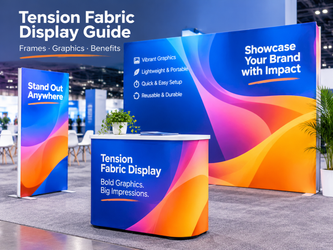
Tension Fabric Display Guide: Frames, Graphics & Benefits
Posted by Kira on Aug 7th 2026
What Is a Tension Fabric Display? A Complete Guide for Trade Show Professionals
Introduction: Why Tension Fabric Displays Are Changing Modern Exhibits
For many exhibit companies, the biggest challenge is no longer creating a beautiful booth.
The challenge is creating a booth that looks premium, ships efficiently, installs quickly, and can be reused across multiple events.
A client may want the appearance of a custom exhibit, but they also want:
- lower transportation costs
- faster setup
- easier storage
- flexible branding updates
This is where tension fabric display systems have become one of the most widely adopted solutions in the trade show industry.
Unlike traditional rigid panels or heavy custom booths, tension fabric displays combine lightweight aluminum frames with stretch fabric graphics to create smooth, professional exhibit walls.
For exhibit designers, commercial printers, and rental companies, this technology provides a balance between appearance and operational efficiency.
At Display2Sign (D2S), we work with businesses that need reliable display systems for repeated events, rental programs, and professional exhibit applications.
Quick Answer: What Is a Tension Fabric Display?
A tension fabric display is a trade show display system that uses a lightweight frame and stretched fabric graphic to create a smooth branded surface.
The system typically includes:
- an aluminum frame
- printed fabric graphics
- a tension attachment method
- supporting hardware
The fabric is stretched over the frame, removing wrinkles and creating a seamless appearance.
Unlike traditional banner stands, tension fabric displays provide a more architectural look while remaining portable and reusable.
For businesses that attend multiple events each year, this combination of professional appearance and easy transportation makes tension fabric displays a popular exhibit solution.
How Does a Tension Fabric Display Work?
A tension fabric display works by creating controlled tension between the fabric graphic and the supporting frame.
The installation process usually includes four steps:
| Step | Process |
|---|---|
| 1 | Assemble the aluminum frame |
| 2 | Connect frame sections or lock the structure |
| 3 | Attach the fabric graphic |
| 4 | Adjust tension for a smooth finish |
The tension created by the fabric helps produce a clean, wrinkle-free appearance.
The final result looks similar to a custom-built wall but can be packed, transported, and reused.
For portable applications, some folding tension fabric systems can be installed in approximately 10 seconds without tools, making them especially valuable for event teams managing multiple setups.
What Are the Main Components of a Tension Fabric Display?
Understanding the structure helps exhibit professionals choose the right system for their clients.
1. Aluminum Frame
The frame provides the foundation of the display.
Common materials include:
- aluminum extrusion
- lightweight alloy structures
- modular connection systems
A quality aluminum frame should provide:
- durability
- repeat-use capability
- consistent alignment
For rental companies, frame reliability is critical because the same hardware may be installed hundreds of times.
2. Fabric Graphic
The fabric graphic is the visual communication layer.
Professional tension fabric displays usually use dye-sublimated fabric because it provides:
- vibrant color reproduction
- lightweight transportation
- wrinkle resistance
- washable surfaces
Many exhibit graphics are produced using polyester tension fabric between 240–270 GSM, depending on application requirements.
3. Graphic Attachment System
The attachment method determines the final appearance.
Common options include:
- silicone edge graphic (SEG)
- zipper fabric
- sleeve fabric systems
SEG has become increasingly popular because it creates a clean, seamless finish.
Learn more about SEG technology in our guide:
What Is a Folding SEG Textile Frame Display
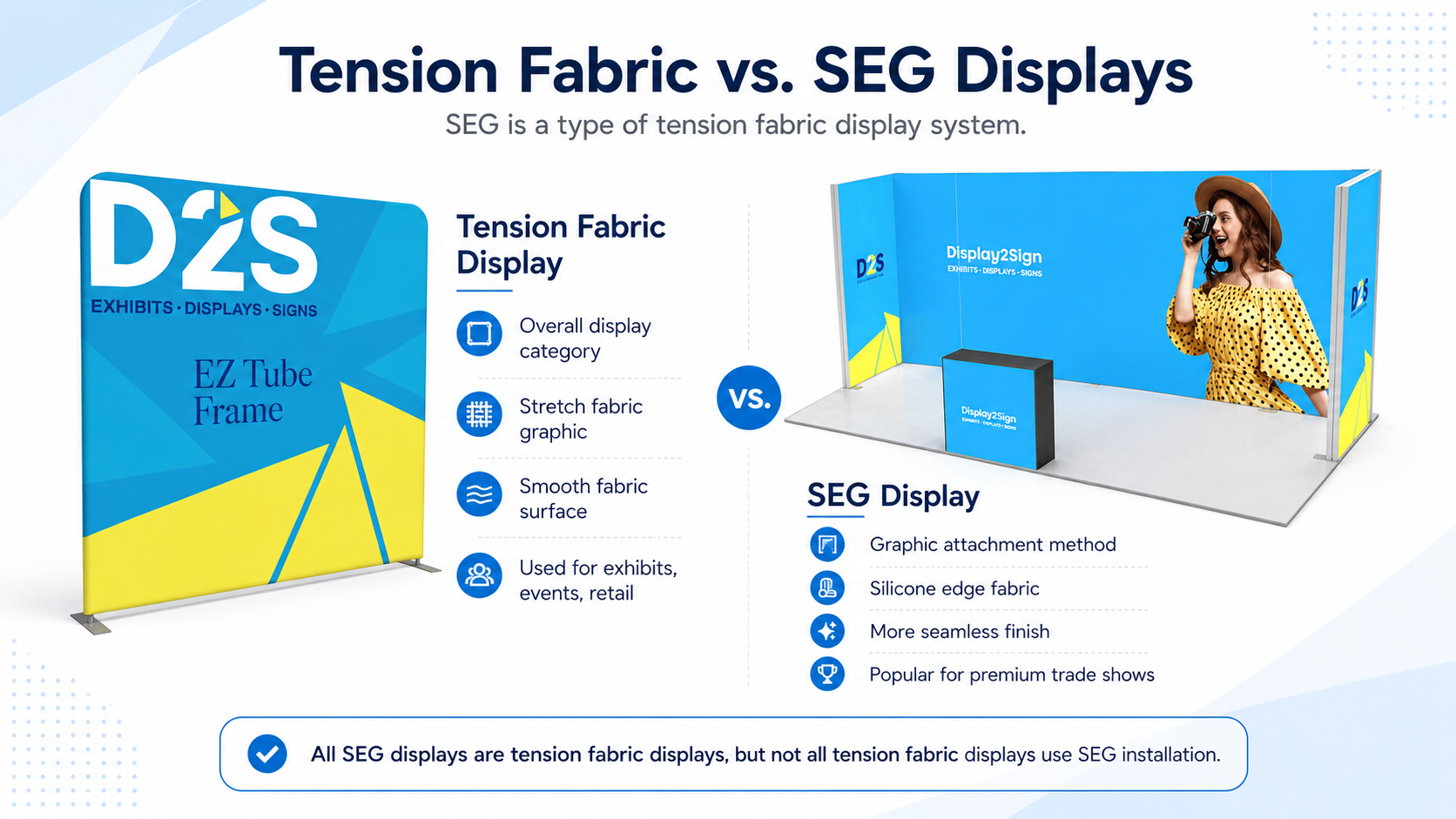
What Is the Difference Between SEG and Tension Fabric Displays?
This is one of the most common questions from exhibit professionals.
The simple answer:
SEG is a type of tension fabric display system.
A tension fabric display describes the overall category.
SEG describes the specific method used to attach the fabric graphic to the frame.
| Feature | Tension Fabric Display | SEG Display |
|---|---|---|
| Category | Complete display system | Graphic attachment method |
| Frame | Aluminum structure | Aluminum structure |
| Graphic | Stretch fabric | Silicone edge fabric |
| Appearance | Smooth fabric surface | More seamless finish |
| Common use | Exhibits, events, retail | Premium trade shows |
A useful industry explanation:
All SEG displays are tension fabric displays, but not all tension fabric displays use SEG installation.
This distinction is important when recommending solutions to your clients.
What Are the Benefits of Tension Fabric Displays?
1. Lightweight and Easy to Transport
One of the biggest advantages is reduced logistics.
Compared with traditional custom exhibit structures, tension fabric displays typically require:
- fewer cases
- less warehouse space
- easier handling
For companies shipping exhibits nationwide, reducing dimensional weight can directly impact profitability.
2. Faster Setup and Removal
Time matters during trade shows.
Exhibit teams often work under strict venue schedules.
A modular tension fabric display helps reduce:
- labor hours
- installation complexity
- training requirements
For rental companies, faster turnaround means more projects can be completed with the same inventory.
3. Replaceable Graphics Reduce Long-Term Costs
One of the strongest advantages of fabric display systems is graphic replacement.
Instead of rebuilding the entire display, businesses can update only the fabric graphic.
This works well for:
- seasonal campaigns
- product launches
- different customers
- rental applications
A rental company can maintain one frame system while supporting multiple branding requirements.
4. Professional Seamless Appearance
Trade show visitors notice presentation quality.
Tension fabric displays create:
- clean lines
- large graphic surfaces
- modern booth designs
This makes them suitable for:
- technology companies
- healthcare brands
- corporate exhibitors
- retail promotions
What Types of Tension Fabric Displays Are Available?
Different businesses require different solutions.
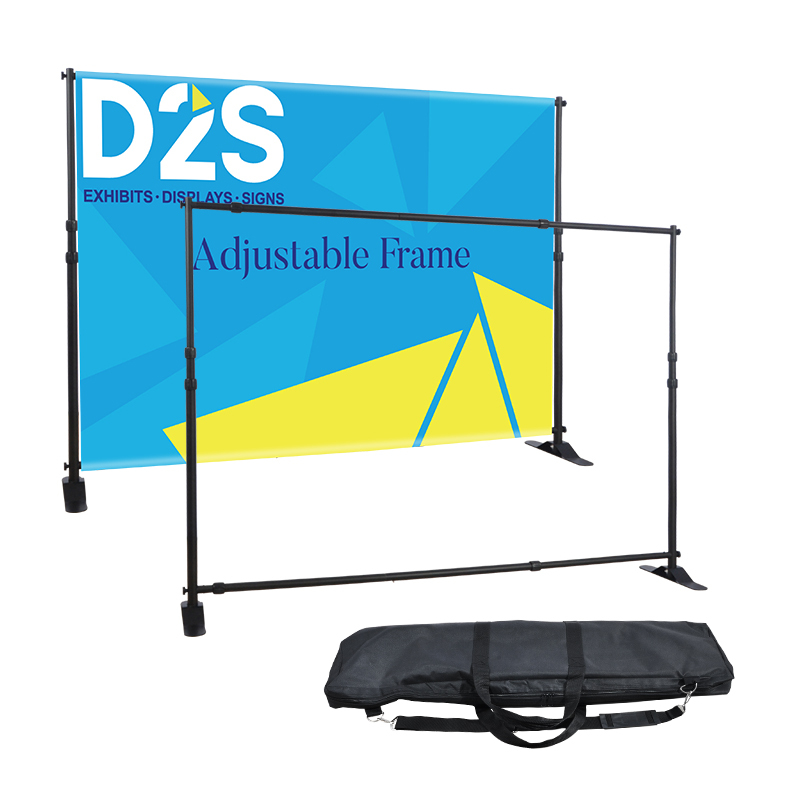
Folding SEG Textile Frame Displays
Best for:
- portable events
- frequent travel
- quick setup
A folding SEG frame combines a lightweight aluminum structure with SEG graphics.
The frame opens quickly, making it ideal for businesses that need mobility.
Explore:
SEG Folding Frame Booth solutions
SEG Light Box Displays
Best for:
- premium branding
- high-impact exhibitions
- attention-focused environments
These displays add LED illumination behind the fabric graphic.
The result is stronger visual impact compared with standard fabric walls.
Explore:
SEG Light Box Booth solutions
Straight Fabric Backwalls
Best for:
- simple branding needs
- presentations
- smaller events
These provide an affordable entry point into tension fabric technology.
How Do You Choose the Right Tension Fabric Display?
The best solution depends on your client's event goals.
| Client Need | Recommended Solution |
|---|---|
| Frequent travel | Folding SEG frame |
| Premium appearance | SEG light box |
| Rental inventory | Modular SEG system |
| Budget-focused display | Basic fabric backwall |
| Large booth space | Expandable modular system |
Before recommending a system, consider:
- booth size
- transportation requirements
- setup labor
- graphic replacement frequency
- storage limitations
Why Are Tension Fabric Displays Popular for Rental Companies?
Rental companies need products that can survive repeated use.
A successful rental display must offer:
- durability
- simple maintenance
- interchangeable graphics
- consistent installation
Traditional custom booths often create inventory challenges because every project requires unique components.
Modular tension fabric displays solve this problem by creating standardized hardware.
A single frame system can support different customers simply by changing the printed graphic.
Case Example: How a Small Exhibit Company Improved Efficiency
A fictional example from our industry experience:
A Texas-based exhibit rental company managed dozens of custom booth structures.
Their biggest problem was warehouse complexity.
Every client required different panels, hardware, and replacement parts.
Their operations team spent hours preparing shipments.
After moving toward modular tension fabric display systems, they standardized their inventory.
The result:
- fewer hardware variations
- faster packing
- easier employee training
- improved rental turnover
The company realized the biggest advantage was not only the appearance.
It was operational efficiency.
For small exhibit businesses, the right display system becomes a business tool.
How Display2Sign Supports Professional Tension Fabric Display Solutions
Display2Sign provides portable exhibit solutions designed for U.S. businesses that need reliable performance.
We support:
- exhibit designers
- commercial printers
- rental companies
- event suppliers
Our focus is helping businesses provide their clients with:
- lightweight display solutions
- reusable hardware
- professional SEG graphics
- flexible booth configurations
With U.S. inventory support and wholesale capabilities, Display2Sign helps partners deliver faster solutions for real-world events.
Learn more:
About Display2Sign and our exhibit solutions
Tension Fabric Display FAQs
What is a tension fabric display?
A tension fabric display is an exhibit system using an aluminum frame and stretched fabric graphic to create a smooth branded display surface.
Are tension fabric displays reusable?
Yes. The aluminum frame can be reused for multiple events, while fabric graphics can be replaced when branding changes.
Is SEG the same as tension fabric?
No. SEG is one type of tension fabric graphic attachment system using silicone edges sewn into fabric graphics.
How long does a tension fabric display last?
With proper storage and handling, professional aluminum tension fabric systems can be reused for many years.
Are tension fabric displays good for trade shows?
Yes. They provide lightweight transportation, fast setup, professional appearance, and flexible branding options.
Conclusion: Why Tension Fabric Displays Are the Future of Portable Exhibits
Modern exhibit businesses need solutions that combine design quality with operational efficiency.
A tension fabric display delivers both.
It provides:
- lightweight construction
- seamless graphics
- reusable frames
- faster installation
- lower long-term costs
For exhibit designers, printers, and rental companies, tension fabric technology creates a practical way to deliver premium-looking booths without the complexity of traditional custom exhibits.
Display2Sign continues to develop modular display solutions that help businesses create better customer experiences while improving their own workflow.