
Fabric Display vs Pop Up Display: Which Is Better?
Posted by Kira on Aug 12th 2026
Choosing the Right Display System Is More Than a Design Decision
When your client asks for a portable trade show display, the question is rarely just:
"Which one looks better?"
The real business questions are usually:
- How fast can the display be installed?
- How much space will it take in storage?
- Can the graphics be updated for future events?
- Will the hardware survive repeated use?
- Can our team ship it efficiently?
For exhibit designers, commercial printers, and rental companies, choosing between a fabric display vs pop up display affects not only the final booth appearance but also operational efficiency and long-term profitability.
Both systems have earned their place in the trade show industry.
Pop up displays remain popular because they are familiar, simple, and budget-friendly.
Fabric displays, especially tension fabric systems, have become increasingly popular because they offer a more modern appearance, lighter transportation, and greater graphic flexibility.
In this guide, Display2Sign explains the practical differences between fabric display and pop up display systems, helping exhibit professionals recommend the right solution for different clients.
What Is the Difference Between Fabric Display and Pop Up Display?
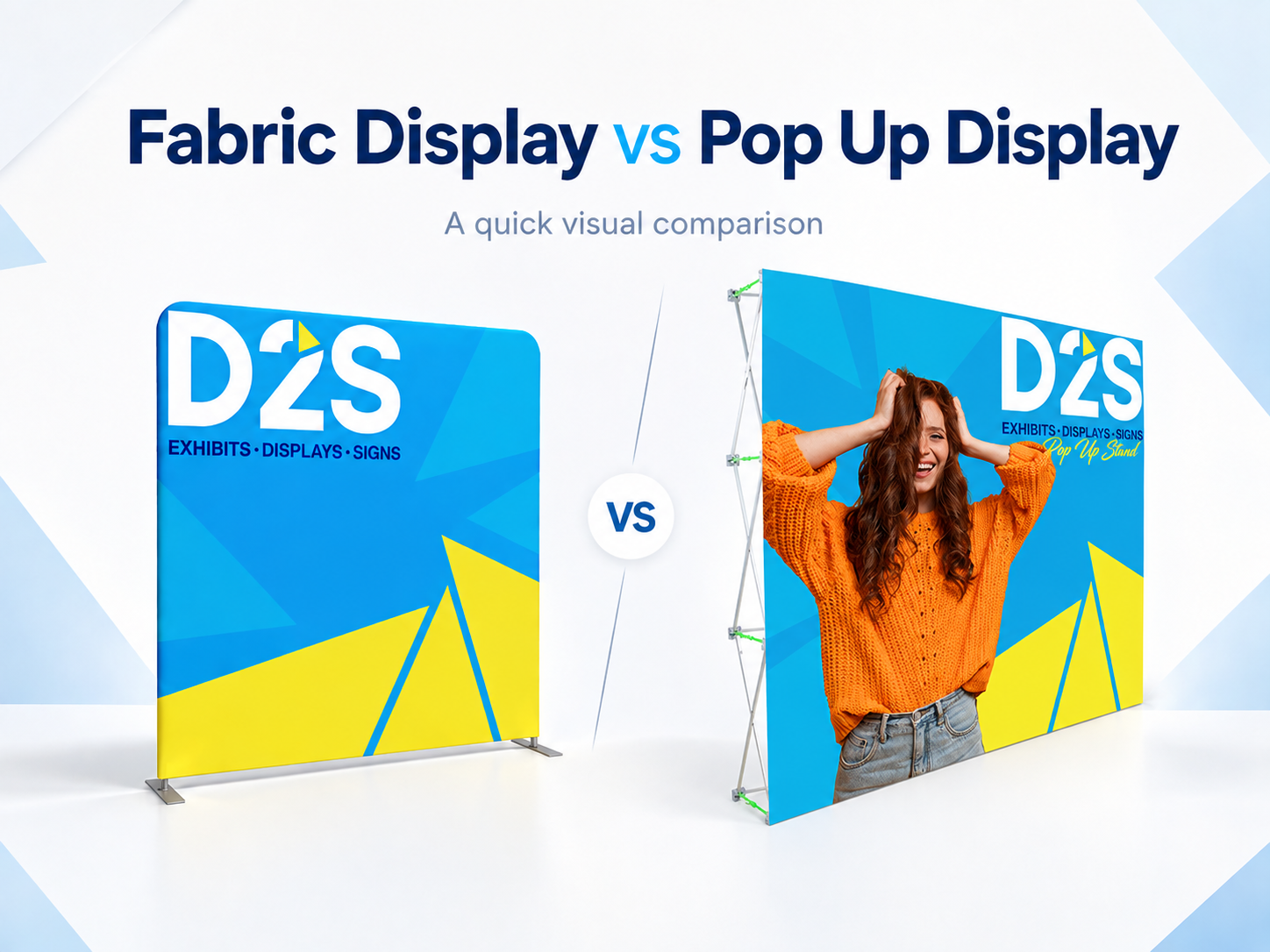
A fabric display uses a lightweight frame and stretch fabric graphic to create a smooth, seamless display surface.
A pop up display uses a collapsible accordion-style frame with graphic panels attached to the structure.
The biggest difference is how the graphic is supported.
Fabric displays create tension across the fabric surface, while pop up displays rely on rigid panels or graphic attachments connected to the expandable frame.
| Feature | Fabric Display | Pop Up Display |
|---|---|---|
| Graphic Material | Stretch fabric | Graphic panels |
| Frame Structure | Aluminum frame | Collapsible accordion frame |
| Appearance | Seamless surface | Visible panel sections |
| Weight | Lightweight | Medium |
| Graphic Replacement | Easy fabric replacement | Usually panel replacement |
| Customization | High flexibility | More limited |
| Best For | Premium exhibits, rentals, branding | Simple booths, budget events |
For businesses that manage multiple clients, the difference is especially important because the display system determines how efficiently inventory can be reused.
How Does a Tension Fabric Display Work Compared With a Pop Up Display?
A tension fabric display works by stretching printed fabric over a supporting frame.
The system usually includes:
- aluminum extrusion frame
- silicone edge graphic (SEG) or fabric attachment system
- dye-sublimated fabric graphic
The tension creates a smooth surface without visible seams.
A folding SEG textile frame display is one of the most advanced examples of this technology because the frame combines portability with a professional exhibit appearance.
Learn more about the technology behind this system:
What Is a Folding SEG Textile Frame Display
A pop up display works differently.
The accordion frame expands outward, and graphic panels are attached using magnetic channels or compatible mounting systems.
Pop up systems are simple and reliable, but the final appearance is usually more segmented compared with fabric graphics.
Fabric Display vs Pop Up Display: Which Looks More Professional?
For many brands, appearance is the deciding factor.
Trade show environments are highly competitive.
A booth needs to communicate professionalism within seconds.
Fabric Display Advantages
Fabric displays provide:
- seamless large-format graphics
- cleaner visual presentation
- modern exhibit styling
- edge-to-edge branding
The fabric surface allows designers to create larger visual areas without interruption.
This makes them especially effective for:
- technology brands
- healthcare companies
- corporate exhibitors
- luxury products
Pop Up Display Advantages
Pop up displays still provide value.
They are useful when clients need:
- simple branding
- quick background graphics
- affordable display solutions
For smaller events or occasional exhibitors, a pop up display can still be a practical choice.
The key difference is:
Pop up displays prioritize simplicity, while fabric displays prioritize presentation quality and flexibility.
Which Display Is Easier to Transport and Store?
Transportation is a major cost factor for exhibit companies.
A display that looks good but is difficult to ship can reduce project profitability.
Fabric Display Transportation Benefits
Most tension fabric displays use:
- lightweight aluminum frames
- foldable fabric graphics
- compact storage cases
The fabric graphic can be folded and stored separately, reducing storage requirements.
For companies managing a rental fleet, this creates significant advantages:
- less warehouse space
- easier inventory management
- lower shipping volume
Pop Up Display Transportation Considerations
Pop up displays are also portable, but some limitations exist.
Common challenges include:
- heavier accordion frames
- rigid graphic panels
- larger storage cases
For companies handling many projects at once, storage efficiency becomes increasingly important.
Fabric Display vs Pop Up Display: Which Has Faster Setup Time?
Both systems are designed for quick installation.
However, setup experience can vary depending on size and design.
| Display Type | Typical Setup Time |
|---|---|
| Pop Up Display | 1–3 minutes |
| Folding SEG Frame | Around 10 seconds for some models |
| Large Modular Fabric Booth | Depends on configuration |
A major advantage of folding SEG systems is tool-free installation.
The frame can open, lock into position, and accept the fabric graphic without complicated assembly.
For event teams working under strict venue schedules, reducing setup time directly improves labor efficiency.
Which Display Has Better Graphic Replacement Options?
This is one of the biggest differences between fabric display and pop up display systems.
For businesses that update branding frequently, graphic flexibility matters.
Fabric Display Graphic Replacement
Fabric displays allow companies to:
- reuse existing hardware
- replace only the fabric graphic
- create multiple branding options
This is especially valuable for:
- rental companies
- event agencies
- exhibit houses
A single frame can support multiple clients simply by changing the printed fabric.
Pop Up Display Graphic Replacement
Pop up displays typically require replacing larger graphic sections.
This can be less flexible when:
- branding changes
- products change
- clients need multiple versions
Why Are Fabric Displays Becoming Popular for Rental Companies?
Rental companies think differently from individual exhibitors.
They need products that can survive repeated cycles.
A successful rental display should provide:
- durable hardware
- simple maintenance
- flexible graphics
- easy transportation
Fabric display systems fit these requirements well.
For example, a rental company may own several modular frames and create different customer experiences by producing new SEG graphics.
This reduces hardware investment while increasing project flexibility.
Real Example: How Choosing the Wrong Display Increased Costs
A small exhibit company in California managed corporate events for regional technology companies.
Initially, they invested heavily in traditional pop up displays because the upfront cost was lower.
However, after several months, they discovered operational problems:
- storage shelves became crowded with different graphic panels
- damaged panels required replacement
- shipping cases increased warehouse requirements
The company later introduced modular fabric display systems for premium clients.
The result was:
- fewer hardware variations
- easier graphic updates
- faster preparation before events
The lesson was clear:
The cheapest display is not always the lowest-cost solution over time.
For businesses managing multiple projects, lifecycle cost matters more than initial purchase price.
When Should You Recommend a Fabric Display?
Fabric displays are usually the better choice when your client needs:
Premium Brand Presentation
Brands that rely on visual impact benefit from seamless graphics and modern designs.
Frequent Trade Show Participation
Companies attending multiple events can reuse frames while updating graphics.
Flexible Booth Configurations
Modular fabric systems can support:
- backwalls
- counters
- hanging structures
- complete booth environments
Explore professional solutions:
Tension Fabric Display solutions
When Is a Pop Up Display Still a Better Choice?
Pop up displays remain useful.
They are a good option for:
- first-time exhibitors
- budget-focused projects
- simple presentations
- short-term events
Not every customer needs a premium modular system.
A professional recommendation should always consider:
- event frequency
- budget
- branding goals
- transportation needs
Fabric Display vs Pop Up Display: Which Is Better for Small Businesses?
For small businesses, the answer depends on their growth stage.
| Business Situation | Recommended Option |
|---|---|
| First trade show | Pop Up Display |
| Multiple annual events | Fabric Display |
| Premium customer experience | SEG Fabric Display |
| Rental business | Modular Fabric Display |
| Simple branding need | Pop Up Display |
A good display partner helps clients choose based on business goals, not only product features.
How Display2Sign Helps Businesses Choose the Right Display Solution
At Display2Sign, we support U.S. exhibit professionals, printers, and rental companies with portable display solutions designed for real event environments.
Our focus is helping partners deliver:
- lightweight exhibit systems
- reusable hardware
- professional SEG graphics
- flexible booth configurations
For businesses looking for higher-impact solutions, our modular options include:
SEG Folding Frame Booth solutions
and
With U.S. warehouse support and wholesale capabilities, Display2Sign helps partners reduce logistics challenges while providing professional exhibit solutions.
Fabric Display vs Pop Up Display FAQs
Is a fabric display better than a pop up display?
A fabric display is usually better for businesses that need premium appearance, reusable graphics, and flexible branding. A pop up display may be better for simple and budget-focused events.
What is the difference between SEG and pop up displays?
SEG displays use silicone edge fabric graphics installed into aluminum frames, while pop up displays typically use expandable frames with panel graphics.
Are fabric displays reusable?
Yes. The aluminum frame can be reused for many events, while fabric graphics can be replaced when branding changes.
Which trade show display is easier to ship?
Fabric displays are often easier to ship because lightweight aluminum frames and fabric graphics reduce storage volume.
Are pop up displays outdated?
No. Pop up displays are still useful for simple applications, but fabric displays are increasingly preferred for modern exhibit environments.
Choosing the Right Display System for Long-Term Success
The choice between fabric display vs pop up display depends on the client's goals.
Pop up displays remain a practical solution for simple, affordable presentations.
Fabric displays provide stronger advantages for companies that need:
- premium appearance
- reusable systems
- flexible graphics
- efficient transportation
For exhibit designers, printers, and rental companies, understanding these differences allows you to recommend solutions that create better client experiences and stronger business results.
Display2Sign helps partners build modern portable exhibit programs with scalable display solutions designed for today's trade show industry.